
Podcast Episode: What do young Piikani, or Blackfeet people, need to thrive?
For the past few years we have been working with Blackfeet Manpower and the Blackfeet Child Support Program on a federally supported grant about Responsible Parenting and Economic Mobility.
We recently concluded the project and have invited several key components of the project, whose participation was pivotal to its success, to be guest speakers on our podcast, to talk about the importance of the project, titled Iiksook’ksooksik (Good Future) for youth in the tribe.
Today we have with us Agnes Blackweasel, who at that time was Director of the Blackfeet Child Support agency and wrote the grant, and it is now the Director of Grays Peak’s Tribal Division; Jayla Wells, who is the Child Support’s Program Manager, Chelsee Pree, who started as an intern for Good Future and then became a Project Specialist at Grays Peak, and is also working full time for the Blackfeet Community College, Dr. Nell Weber O’Donnell, who designed the curriculum and managed the program’s evaluation, and finally, we will also hear from Maureen Leif, who acted as Project Manager for this project.
Jayla shares about how many people she met along the way inspired her to work on this project; they were mostly native elders who helped her to form a vision for the project, and actively participated in the project by being on the project’s Advisory Board.
Nell worked closely with the Blackfeet community as curriculum developer and project evaluator. She spent a lot of time talking to community members and looking at the impact the project had on youth. She will share with us her perspective on the project, most importantly noting that the project reached 700 community members, between youth and community leaders. Considering the relatively small community, this number is remarkable and speaks to the effectiveness of Good Future in connecting community members.
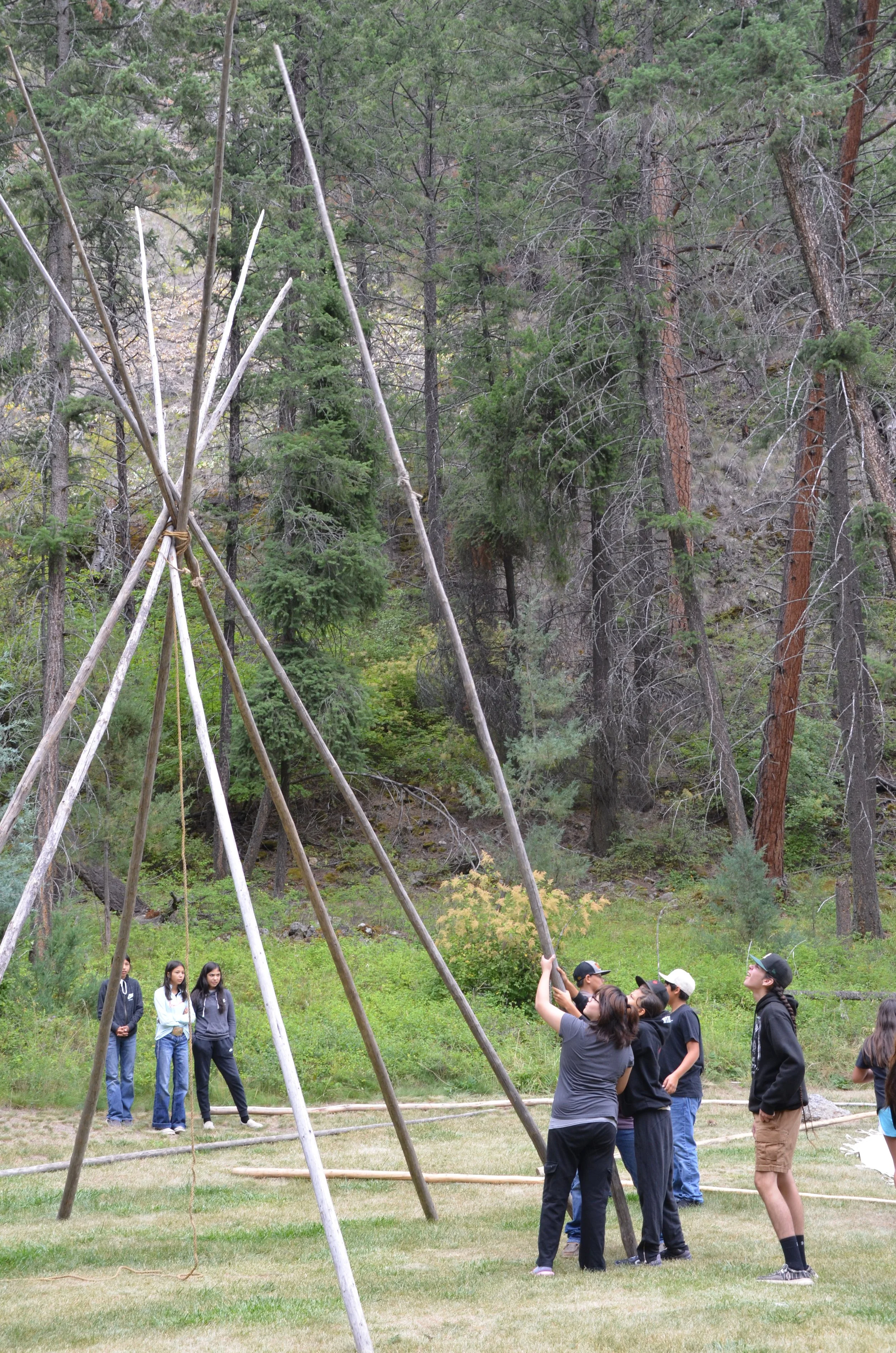
Youth building a Teepee during the A’sutapi Camp, summer 2026. Photo by Addison Leif
The project allowed us to create a curriculum and activities that gave local youth career knowledge opportunities, financial literacy, information about creating a healthy family, all through the lens of the Blackfeet’s culture. The project’s fundamental tenet is that the Blackfeet identity is the solid foundation of creating healthy relationships and financial stability. The most exciting part of the project has been indeed incorporating culture in every aspect of the project.
Jayla shares details of two summer Jobs Orientation events she ran through the grant. 250 youth participated in the program. You will hear remarkable notions such as many as half of the participants had never drafted a budget before attending the orientation.
Learning how to put together a budget gave them the tool to better control their finances. This is the first step to have decisional power on your future.
Participants also attended a financial simulation that put into work what they had recently learned in the job orientation session. Youth who participated in the simulation said the most useful notion they learned during the Spending Frenzy were the concept of smart spending, and learning about investing: two approaches to financial literacy that were new to many of them.
Another important aspect of the project was the digital storytelling. It targeted youth but also embraced elders from the community about their parenting experience. Everyone could relate to the stories told. For Jayla and others who actively participated in the digital storytelling, it also acted as a healing process.
These stories tell Blackfeet youth that real life often does not follow an idealized linear path where you first graduate, find a stable job, get married and have kids. They show the community it is OK to not follow that path, but it is important not to get lost in the often chaotic ways life presents itself, still being able to find your own good path.
This is what it means to have a Good Future, to have a Good Life, even when life challenges you with negative events.
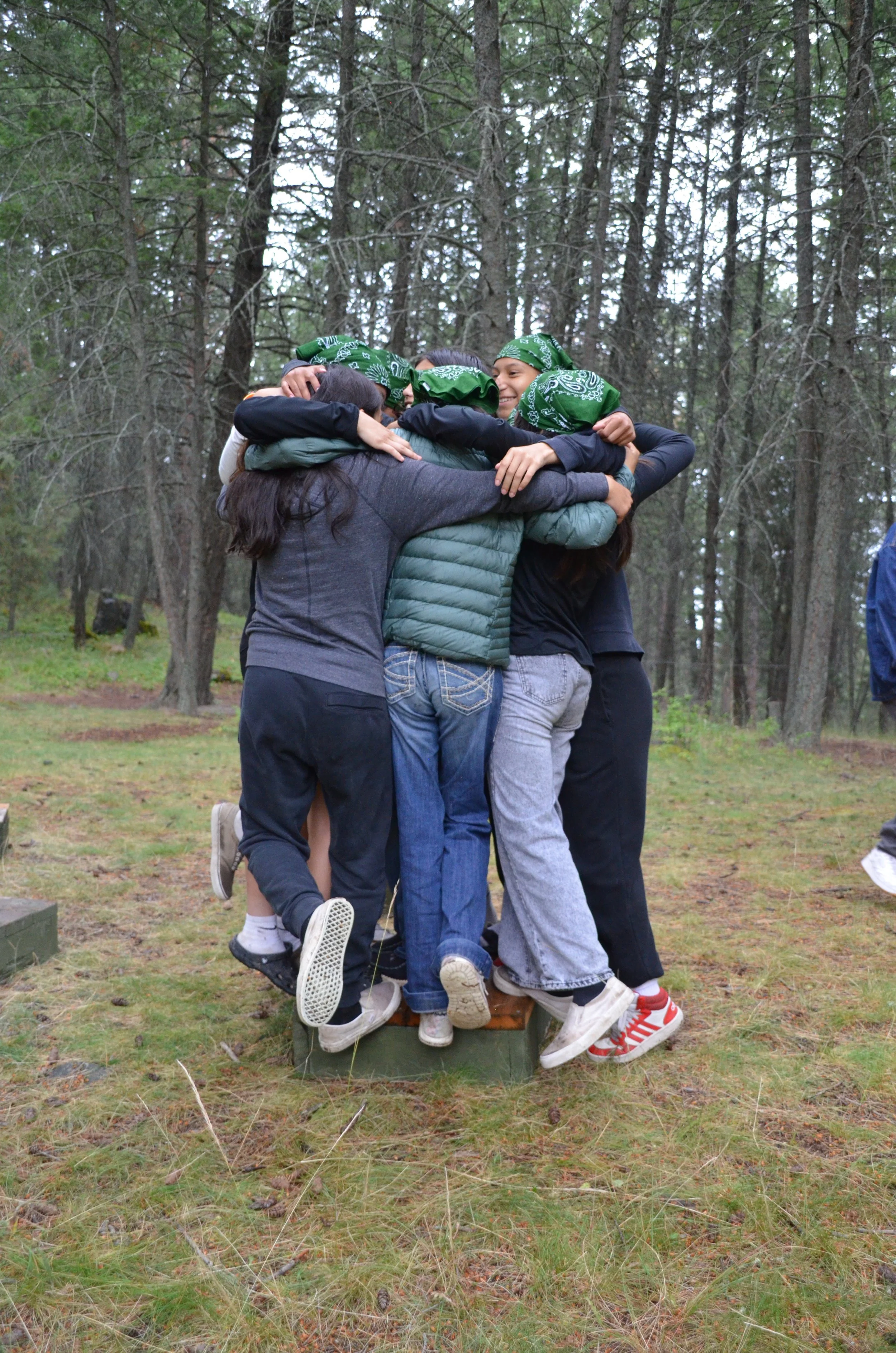
Youth at the summer camp. Photo by Addison Leif
YOU CAN FIND THE PODCAST ON:
SPOTIFY (AND SPOTIFY FOR PODCASTERS), APPLE PODCASTS, GOOGLE PODCASTS, AND IHEART RADIO
Teaching about financial literacy and responsible parenting through digital stories was the perfect tool for the Blackfeet community as it embodies the long held tradition in the tribe of storytellers. It continues that tradition through new media.
Looking at the responses after the community screenings of the digital stories, the overall sense is that local youth felt less alone in their struggles. It demonstrated some of the difficult stories and challenges an individual can encounter in their life are recurrent in many families within the community.
Still, a Good Future is possible, even if challenged by difficult life events. This is the the life line of the grant.
One aspect of the project that was very important is the Youth Participatory Action Project in collaboration with the Piikani Youth council. A small group of young people met over a year, once or twice a month, to undertake an action project on an important community issue.
They evidenced that a generalized youth mental health crisis triggered by loss of hope for a better future was an endemic problem in the community. There have been cases of suicide and attempted suicide, or violence against others, among local youth. The outcome of this group action was so effective that the group was invited to speak at a national conference about their experience.
The work we inspired with this grant could be continued by other youth programs in the community. We hope to pass the material gathered, like the financial literacy simulation, to other organizations in the community for them to continue to offer these opportunities to local youth.
A replication toolkit was assembled, it will soon be available publicly. Anyone can use the toolkit. We hope the community will continue to use it.
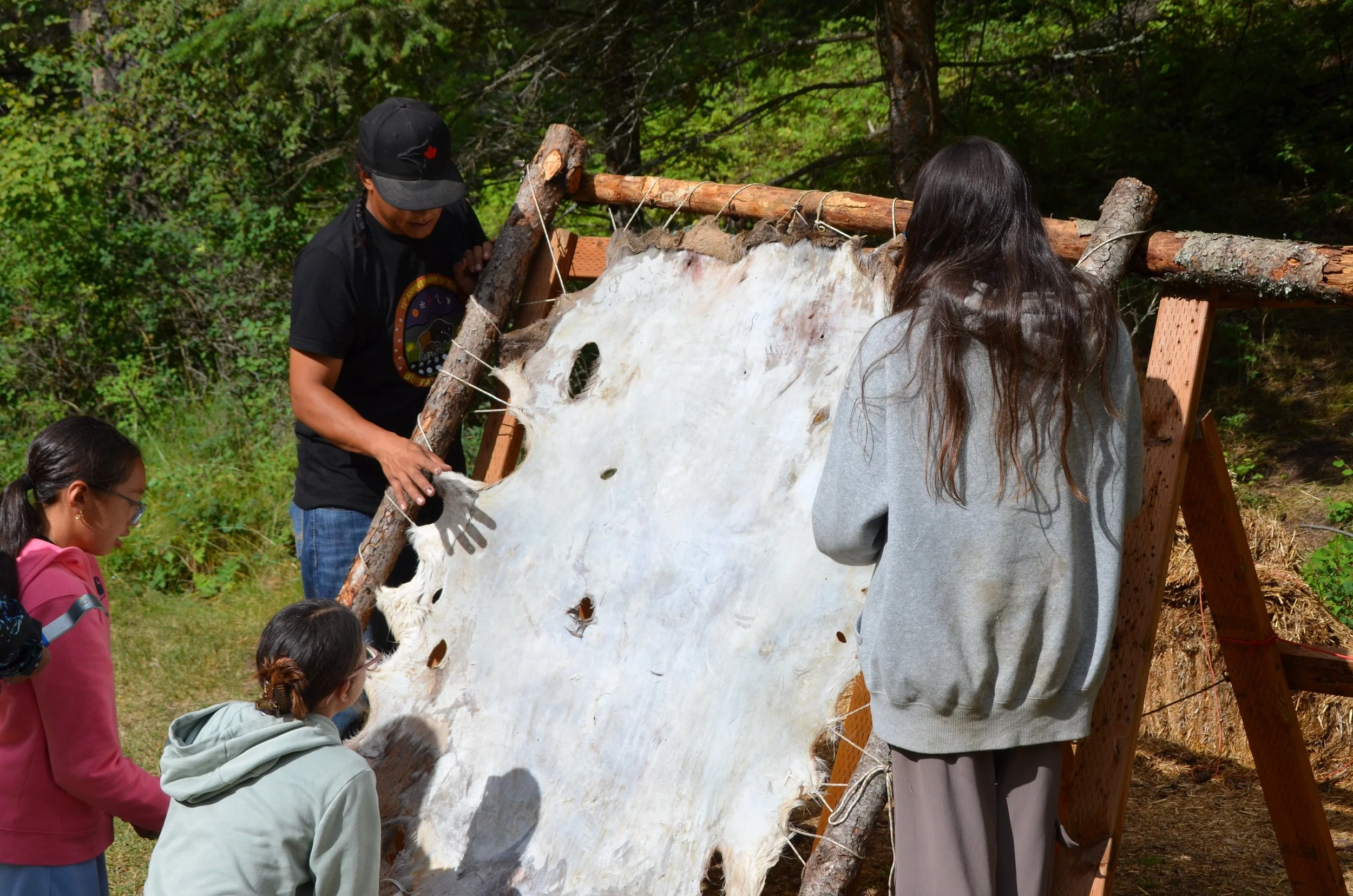
Finally, our guests on the podcast address the A’Sutapi Summer Camp, which was an important part of the project. The hope is that the camp will be continued by other local organizations. The impact was very meaningful for young participants. For some it was the first tim learning words in Blackfeet. First time sleeping in a tent or cabin or building a teepee. First time kayaking or canoeing, first time doing traditional games, first time away from their usual environment.
Agnes, Jayla and Chelsee on this project are all Blackfeet themselves. They see their participation in creating this project as their investment in future leaders, in keeping the traditions alive, and respecting elders.
For Nell, the investment is learning to take a seven generation mindset. Seven generations back and seven generations forward. That means embracing past and new generations. Think about the connection between past and future, not just what can benefit you in the moment, but acknowledge the work done by people before you and build a future for the generations after you.
Chelsee on our team can be considered the poster child of this amazing project. She started as intern, and now is on staff and, along the journey, became a parent herself. She embodies the purpose and the goal of the project. Jayla is also a young mother. We cherish their involvement, their commitment, their hard work as community members, and as parents.
Last shout out to Agnes. None of this would have started without her determination as Child Support Director to get this project in motion.